
Media Audience Research
Media Audience Research: Who Reads You and What Your Audience Needs
Media audience research is a quantitative survey of readers, viewers or subscribers that identifies their socio-demographic profile, information needs, media consumption, attitudes to the media brand and its position versus competitors.
We conduct the research through your own channels or recruit the required respondents ourselves. We handle the methodology, questionnaire programming, recruitment, sample control, data processing, analysis and a report with recommendations. Where needed, we also survey the regional population or a defined target audience to measure reach and show how your media outlet performs against competitors.
Who it is for
Media outlets that already have an audience but still lack reliable data about it
Telegram channel audience research shows who is behind the views and reactions: subscriber profile, habits, reasons for reading and attitudes to advertising.
You need a robust audience profile for advertisers and editorial decision-making.
A local media reader survey helps you understand who lives in the community today, what matters to this audience and what information they need.
A smaller but highly engaged audience, with very little external data available about it.
You need one consistent study to compare several platforms and measure reach and impact.
Sound familiar?
This is usually where the research brief begins
You have the views. What is missing is evidence for the editorial team, advertisers or donors.
We know our reach numbers, but we do not know who these people are
Platform analytics show views and shares, but not age, financial situation, occupation, location, habits or why people choose your media.
Advertisers ask for data
A media kit without audience demographics and consumer behaviour data is weaker than a competitor’s media kit that includes this evidence.
We do not know how large we are compared with competitors
Internal analytics from different media outlets are not directly comparable. You need one external measurement across the region.
The editorial team debates topics and formats
What people read to the end, what they are missing, which formats annoy them and when they prefer to receive news can all be measured.
A donor or grantmaker asks you to demonstrate impact
A survey provides structured evidence on reach, trust and behaviour that can be used in a report or funding application.
We already tried a Google Form, but the sample was biased
Without quotas, quality control and weighting, the most active readers are overrepresented. That dataset is difficult to defend in front of partners.
From Discovery Research practice
How We Have Done It
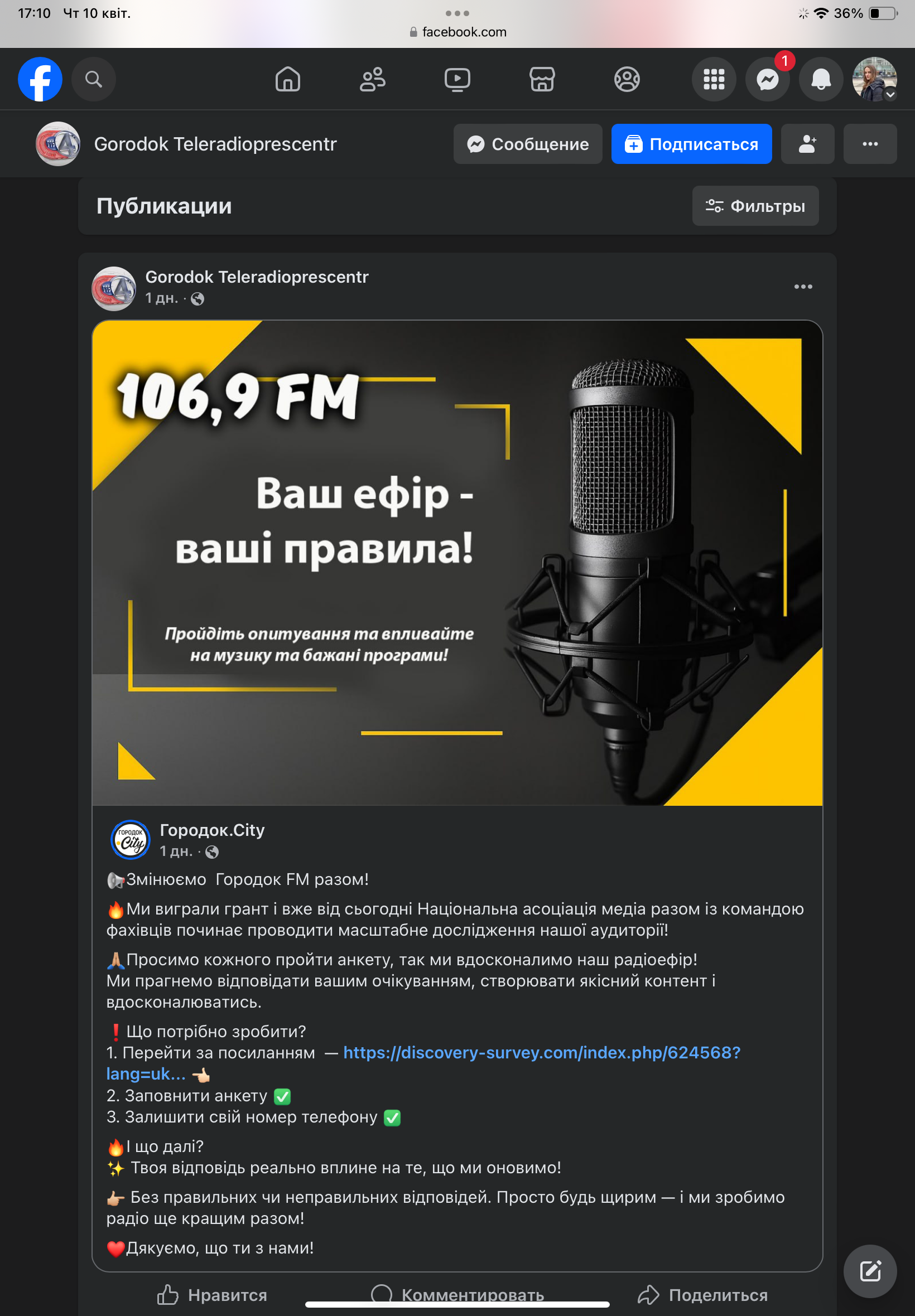
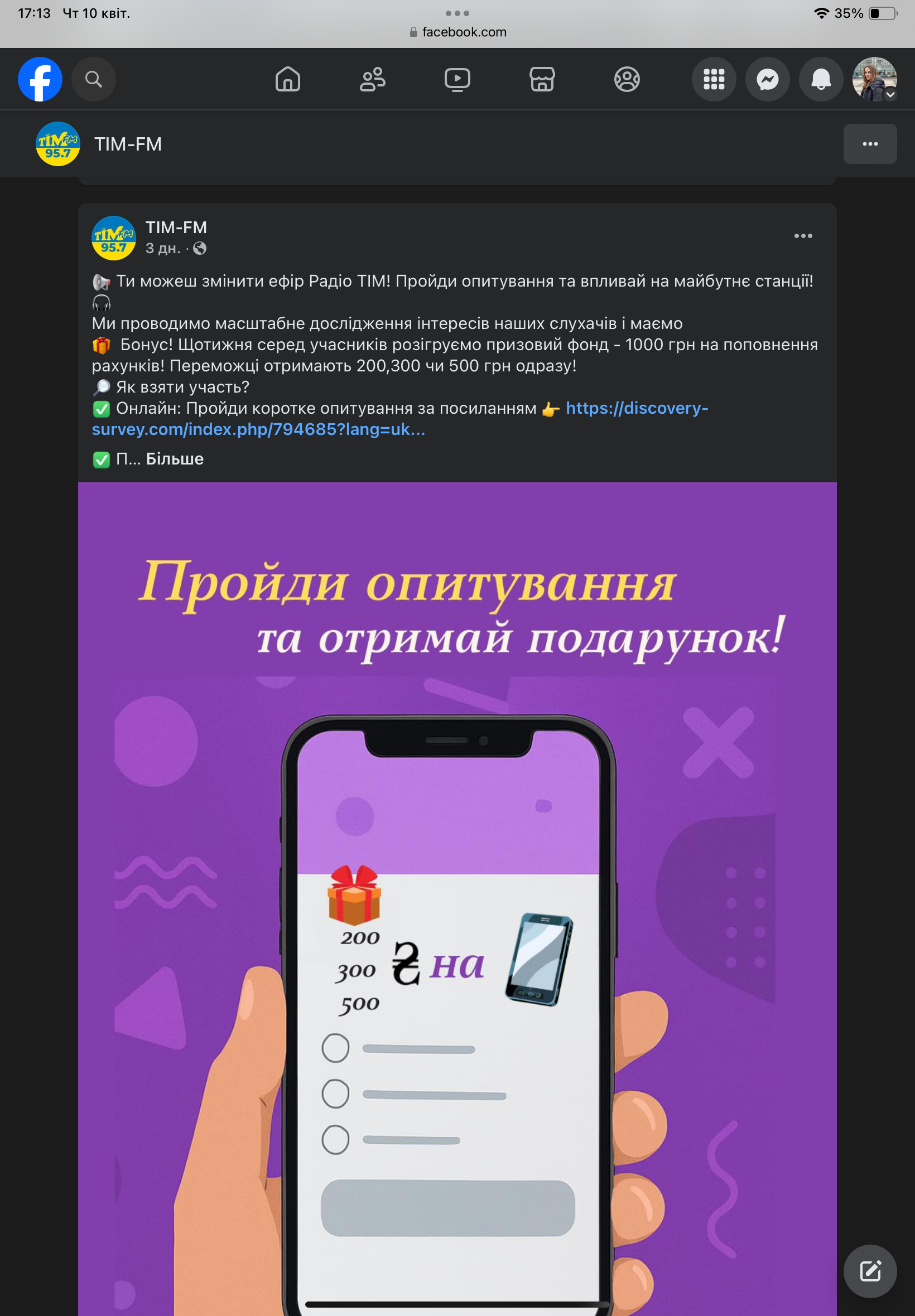
We plan how to approach the audience, monitor who is responding and adjust recruitment when needed. Data collection therefore becomes part of the research design rather than simply publishing a form.
We work through your channels
You provide access to your readers or viewers, while we prepare the questionnaire and communication approach, control the sample and manage the entire fieldwork stage.
We recruit the required respondents ourselves
Discovery Research organises recruitment of the required target audience. For donor-funded and large-scale studies, we can also survey the regional population or another target audience to estimate the media outlet’s actual reach.
Deliverables
What You Receive
Audience profile for your media kit
Gender, age, city and settlement type, education, employment, household composition and perceived financial situation.
Media consumption
Where people get their news, which other channels and publications they use, how much time they spend with content, which devices they use and when.
Attitudes to your media
Awareness, frequency of use, trust, willingness to recommend, strengths and weaknesses, and opportunities for improvement.
Content needs
Which topics are missing, which formats work best and what people are willing to watch, listen to or read in depth.
Consumer behaviour
Purchase categories, brands, purchase intentions and reactions to advertising in your media. This provides evidence for commercial proposals.
Competitor benchmarking
Competitor awareness and usage, audience overlap and your share among news sources in the region.
Media reach measurement in the region
For donor-funded projects and large-scale studies, we can separately estimate media reach among the regional population or a defined target audience: the share of people who know, read, watch or regularly use your media.
Ready-to-use materials
Tables, an analytical report, and ready-to-use slides and figures for a media kit, presentation or funding application.
How It Works
You provide access to the audience. We handle the research
The project can focus only on your own audience or include a separate regional sample for a valid comparison with competitors.
Define the research objective
We define the decisions the research should support: selling advertising, changing content, demonstrating impact or expanding geographically.
Questionnaire built around your decisions
We prepare a concise questionnaire and phrase questions so the results can be compared with regional data and future waves.
Logic, rotations and quotas
We program the questionnaire on our platform, adding duplicate controls, validation checks and protection against poor-quality responses.
We work through your channels or recruit the audience ourselves
If you have direct access to readers or viewers, we help you distribute the survey correctly through your channels. If not, Discovery Research organises recruitment independently, including through our online respondent panel or CATI telephone surveys, depending on the research objective and target audience.
We monitor the sample every day
We monitor gender, age, geography and other parameters. If the sample becomes skewed, we adjust recruitment and communication.
We build an external comparison sample
In parallel, we survey people in the region outside your own audience to measure awareness, usage frequency and the competitive landscape. For projects outside Ukraine, we can also provide international data collection.
We clean, weight and compare the data
We build tables, identify segments, test hypotheses and develop analytical conclusions.
Report and recommendations
We deliver the report, tables and slides and present the findings to your team.
What Is Included in the Report
Methodology, data, comparisons and conclusions
Practical questions
Questions the Research Answers
Why It Works
Your audience access + controlled research methodology
The survey lives in your channel
The audience responds to your media brand rather than an unfamiliar researcher. This can improve response rates.
The sample is controlled
Quotas and sample monitoring reduce overrepresentation of the most active readers.
The methodology can withstand scrutiny
The sample design, procedures and quality controls can be shared with advertisers, donors or partners.
The data can be compared
Results can be compared with regional data and future waves of the study.
The study can be repeated
A subsequent wave shows changes in audience profile, brand awareness and shifts in attention.
Engagement Formats
From a one-off study to regular tracking
Basic
A survey of your own audience, tables and an analytical report.
With benchmarking
We add a separate regional sample and direct competitor benchmarking.
Tracking
Regular waves using the same questionnaire to track audience changes and your position in the region.
For a media network
One study covering several media outlets with direct comparison between them.
Pricing is calculated for the specific research task after a short brief.
FAQ
Frequently Asked Questions
How many respondents are needed for reliable data?
How long does the project take?
What if my channel has a small audience?
Could a survey damage our relationship with the audience?
Can we include our own questions?
Can we publish the results?
We need data for a media kit. What exactly will we receive?
How do you check response quality?
Can you compare us with a specific competitor?
Is this suitable for a grant application or donor report?
Next step
Tell us about your media outlet and the decisions you need to make
We will come back with a research plan and quotation. In your first message, simply include the media outlet name, a link to the channel or website, the location and a short description of the task.